 Website planning
Website Navigation That Helps Customers Find the Right Service
Plan clear service groups and menu labels, connect useful pages and test bilingual customer routes before adding more navigation.
Read the article
A newly launched business does not always need a large website. It needs a clear place for people to discover the business, understand its services and get in touch. Affordable website design should make that first step achievable, with a scope and ongoing costs you can manage.

A customer hears your business name from a friend, sees your social media post or receives your quotation. Their next question is often simple: where can I find out more? A website gives them one place to understand your services, see your work and check how to reach you. For a new business, that can be more useful than a complicated site full of features you are not ready to manage.
Malaysia’s digital business landscape is developing. DOSM’s ICT and E-commerce by Establishment 2025 report, covering 2024, recorded web presence among 74.4% of establishments, up from 72.7% in 2023. Web presence includes different online channels; it should not be read as the percentage with their own website. The broader direction is clear: businesses are building more ways to be found online.
That does not mean every newly launched business needs a large website. A practical first step is a credible place to send interested customers, supported by the channels you already use.
When starting a business, you may be arranging stock, serving customers, building a team and watching cash flow. Writing twenty website pages can sit at the bottom of that list. A smaller launch is often a sensible choice when it reflects what the business actually offers today.
Think of a local air-conditioning company. Its first website could explain installation and servicing, the areas covered, examples of completed work and how to request a quotation. It does not immediately need a customer portal, an extensive knowledge centre or a page for every neighbourhood. Those additions can wait until there is a clear reason for them.
The goal is a useful first version. Visitors should understand who you are, whether you can help them and what to do next. Size alone does not answer those questions.
A ready-made five-page website can keep this first stage focused when the existing layout suits your services and content.
An affordable website should fit both your budget and your business needs. The lowest initial quotation is only part of that decision. A site that is difficult to use, missing important information or expensive to maintain can cost more over time.
Good affordable website design comes from choosing a focused scope: a clear layout, readable text, relevant images and a straightforward enquiry path. You save by limiting unnecessary complexity, while keeping the essentials that help a customer trust and use the website.
Before comparing prices, ask what the quotation includes. Consider content preparation, mobile design, domain registration, hosting, ongoing support and future changes. Our guide to business website costs in Malaysia explains how to compare the complete scope rather than the headline price alone.

Start with the questions you hear during real enquiries. What do you offer? Who is it for? Where do you operate? What makes your work credible? How can someone contact you? Let those questions shape the website before deciding on page count.
A focused service business website might include a clear introduction, an about section, service details, examples or genuine customer feedback, and contact information. These can be organised into a few pages or a compact single-page website when the information is simple. There is no universal number of pages that makes a website professional.
Make the next step obvious. If customers normally contact you through WhatsApp, give them a clearly labelled enquiry button. Display the service area and opening hours where relevant. Use real project or product photographs when available, and make phone numbers easy to tap on mobile.
Do not invent reviews or fill pages just to make the business appear bigger. Honest, specific information is more useful than a long website with little substance.
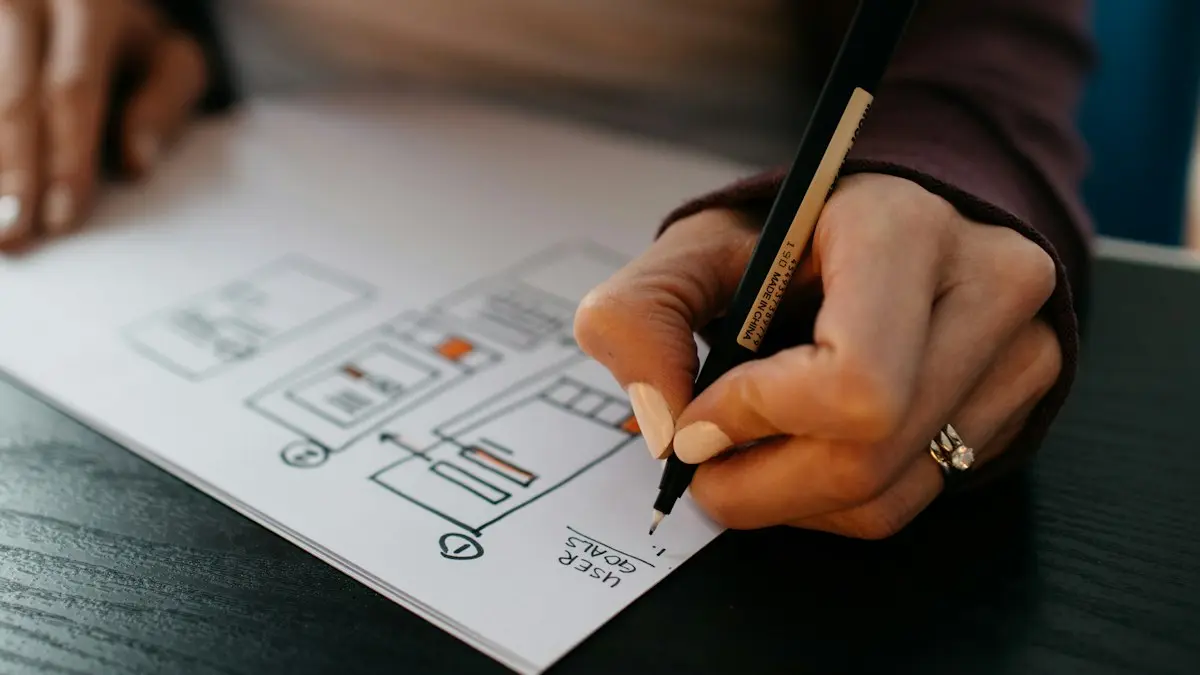
You do not need to abandon Facebook, Instagram or other channels to launch a website. Each can play a different role. Social posts introduce your work and keep people informed; a website organises the information that should remain easy to find.
For example, a renovation business may share recent projects on Instagram while its website explains the services, areas served and enquiry process. A visitor can move from a post to a service page without searching through months of updates for the basic details.
Your own domain also gives you a consistent address to put on quotations, business cards, directories and social profiles. Keep the business name, contact details and service description consistent across those places. A website becomes more useful when it is part of how you already meet customers.
There are several ways to manage the cost of a first website. You could use a website builder, commission a small custom site or start with a professionally designed template. The right choice depends on how much time you can spend setting it up, who will update it and what functions you genuinely need.
A template can reduce design work when its structure already suits the business. A custom design can be worth the investment when your message or customer journey needs a different approach. A content management system is useful if you need to publish or edit frequently; a static site can suit information that changes less often.
Whichever route you choose, protect the basics: a secure connection, sensible loading speed, readable mobile layouts, clear navigation and working enquiry links. Ask who controls the domain, what backups are available and how updates are handled. If online payments, stock management or customer accounts are essential, plan for those requirements from the start.
Postpone features because they are unnecessary today, rather than because the quotation has not explained their importance.
A small website can still be delayed when the service descriptions, contact details or photographs are not ready. A larger project can move smoothly when decisions and materials are prepared. Being clear about what you want to say often saves more time than choosing a launch date alone.
Write a short business introduction, list your main services and service areas, gather your logo and images, and decide which contact method to prioritise. Choose one person to approve the content and design. Check factual claims, prices and business details before sending them to your designer.
Our website project preparation checklist can help you organise this. You do not need perfect marketing language before the first conversation, but you do need accurate information and a realistic understanding of what the provider will write or edit for you.

Your first website is a starting point. After launch, pay attention to the questions customers still ask, which services receive interest and where enquiries come from. Those observations can guide your next investment: clearer service information, better photographs or an additional page with a real purpose.
Allow room in the budget for renewals and maintenance. Confirm how future pages or changes will be charged; a smaller initial scope does not automatically include free expansion later. Ask about these costs before committing so the website remains manageable as the business grows.
For search visibility, focus on useful information and a sound technical foundation. Google recommends helpful, reliable content created for people. Adding more pages or repeating “affordable website design” does not create a useful customer experience by itself. Search visibility takes time, and publishing a website is not a promise of first-page rankings or immediate enquiries.
If your main priority is to establish an online presence, begin with what customers need to know now. Choose a website you can afford to launch, keep accurate and maintain. There is nothing wrong with starting small when the result presents your business clearly.
For businesses that prefer an existing design, Mix Web Design offers a ready-made 5-page website package at RM1,888. It is one option for a focused first website. Browse the templates to see whether a layout suits your needs; the templates page explains the current inclusions, timing, renewal and terms.
If your requirements need a different approach, explore our custom website services or tell us about your business. The best starting point is the one that helps your customers understand you and gives your business room to move forward.
Website planningPlan clear service groups and menu labels, connect useful pages and test bilingual customer routes before adding more navigation.
Read the article Website planning
A practical handover plan for Malaysian small businesses: separate domain, hosting and email, check usable files and test enquiries before switching.
Read the article Website planning
Choose a complete first release, defer extras with clear reasons and use real customer questions to guide your next website improvement.
Read the articleLET’S TALK ABOUT YOUR WEBSITE
A new website or a fresh direction for your existing one. Tell us about your business and what you’d like to achieve.
Tell us about your project