 Website planning
Website Navigation That Helps Customers Find the Right Service
Plan clear service groups and menu labels, connect useful pages and test bilingual customer routes before adding more navigation.
Read the article
Clicks are easy to count, but they are not the purpose of most advertising campaigns. A campaign can attract more visitors while producing fewer suitable enquiries. Better Google Ads decisions begin by connecting search terms, landing pages and conversion quality to actual business outcomes.
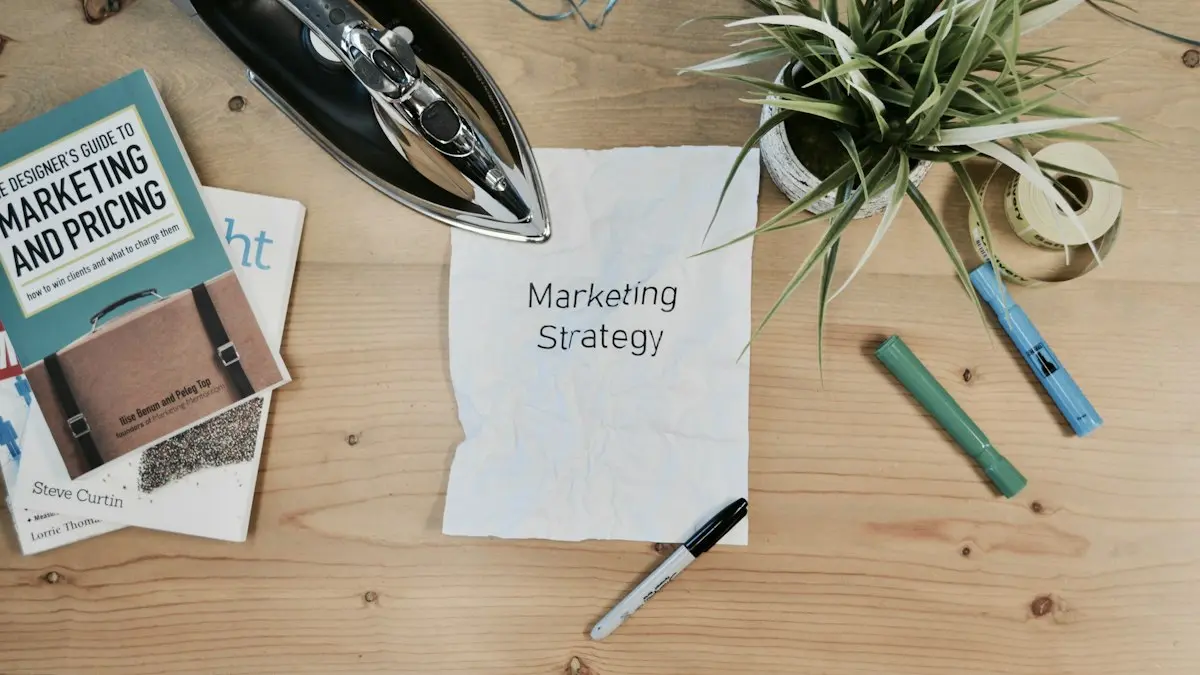
When someone clicks an advertisement, Google Ads has delivered a visit. It has not delivered a customer. The visitor still needs to find a relevant offer, understand the value, trust the business and complete an action. If any part of that journey is weak, increasing clicks mainly increases cost. This is why click-through rate should be treated as a diagnostic measure rather than the final definition of success.
A strong click-through rate can indicate that the keyword and advertisement match what people are searching for. It can also come from an attractive but overly broad promise. Review what happens after the click: engaged visits, phone calls, forms, WhatsApp conversations, bookings and sales. The most useful measurement depends on how your business closes customers.
Keywords are the targeting instructions, while search terms are the real phrases people typed. That distinction is essential. A campaign may target “office renovation company” but appear for research questions, jobs, training or do-it-yourself information if matching is too broad. Those visitors may click because the ad looks relevant, yet they were never likely to request a quotation.
Review the search terms regularly. Add irrelevant phrases as negative keywords and separate different intentions into focused groups. Commercial terms such as “company,” “service,” “price,” “supplier” or a location can indicate stronger buying interest, although context still matters. Do not remove informational searches automatically; decide whether they support your sales journey or simply consume budget without creating value.

Campaign reports can look successful when every page view, button hover or short phone tap is counted as a conversion. Define primary conversions that represent business intent, such as a submitted enquiry form, a call over a useful duration, a completed booking or a qualified WhatsApp contact. Secondary actions can still be recorded for analysis, but they should not carry the same value.
Test the tracking yourself. Submit each form, tap phone and messaging links, and confirm that events appear once rather than multiple times. Check thank-you pages and cross-domain bookings if external tools are involved. Incorrect tracking can lead automated bidding toward the wrong behaviour. Clean data is more valuable than a large number of questionable conversions.
If a campaign spends RM1,000 and produces ten enquiries, the cost per lead is RM100. That number is only useful when the enquiries are relevant. Ten requests for services you do not provide are not better than three suitable opportunities. Add a simple lead-quality process: qualified, unqualified, duplicate, spam, existing customer or other. Share that feedback with whoever manages the campaign.
For businesses with longer sales cycles, connect advertising leads to quotations and confirmed sales when possible. A more expensive keyword may be profitable if it brings higher-value projects. A cheap keyword may waste staff time if it produces many poor enquiries. Optimisation should move toward revenue and suitable customers, not simply the lowest visible cost.

Visitors click because the ad matches a need. The landing page should immediately confirm that match. If an ad promotes Google Ads management for Malaysian service businesses, sending traffic to a general homepage makes visitors search again. A focused page should repeat the offer clearly, explain who it is for, show the process and proof, answer common concerns and provide an appropriate action.
Page speed and mobile usability also affect results. Paid traffic is especially unforgiving because every difficult visit has a direct cost. Compress images, avoid unnecessary scripts, keep the main message visible and make forms comfortable on a phone. Consistency between keyword, advertisement and landing page is one of the most reliable ways to improve both user response and campaign efficiency.
Raising the daily budget gives the campaign more opportunities to enter auctions. It does not make the service more attractive or the page more convincing. Before increasing spend, confirm that the offer is competitive, pricing expectations are realistic, service areas are correct and the business can respond quickly. Advertising exposes the existing sales proposition; it does not automatically repair it.
Automated bidding can be powerful after the account records enough reliable conversion data. When volume is low or tracking is incomplete, automation may optimise toward signals that do not represent customers. Use a bidding approach that fits the available data, then give major changes enough time to stabilise. Constant adjustments make it difficult to know what improved or harmed performance.

Review performance in sequence. Impressions show visibility. Click-through rate helps assess the relationship between targeting and ads. Cost per click shows what traffic costs. Landing-page engagement and conversion rate show what happens after arrival. Cost per qualified lead connects marketing to sales quality. Close rate and customer value reveal whether the campaign contributes profit.
No single metric explains everything. A lower click-through rate can still produce better business if the audience is narrower and more relevant. A higher cost per click can be acceptable when conversion and project value improve. Compare periods only after accounting for budget, location, seasonality, offer changes and tracking changes. Context prevents attractive percentages from driving poor decisions.
A practical improvement cycle is simple: verify tracking, review search terms, separate intent, strengthen ads, improve the landing page and classify lead quality. Change a limited number of important elements, record when changes were made and evaluate them over a meaningful period. This creates learning rather than random movement.
More clicks are worthwhile when they bring more of the right people into a journey that works. If clicks rise but suitable enquiries do not, resist the urge to celebrate the traffic. Find the break between search, promise, page and response. The best campaign is not the one that generates the busiest report; it is the one that helps the business acquire customers at a sustainable cost.
Website planningPlan clear service groups and menu labels, connect useful pages and test bilingual customer routes before adding more navigation.
Read the article Website planning
A practical handover plan for Malaysian small businesses: separate domain, hosting and email, check usable files and test enquiries before switching.
Read the article Website planning
Choose a complete first release, defer extras with clear reasons and use real customer questions to guide your next website improvement.
Read the articleLET’S TALK ABOUT YOUR WEBSITE
A new website or a fresh direction for your existing one. Tell us about your business and what you’d like to achieve.
Tell us about your project